
Alamance County Court Docket Searches
Start your Alamance County court docket search at the North Carolina eCourts Portal. Pick Smart Search there. Set the location to Alamance when the case belongs in Alamance County. A case number gives the strongest match. If you lack one, a party name will usually pull results too. A citation number often works as well. The Portal labels its activity timeline a Case Summary or Register of Actions. That is the system's name for what most people call a docket.
Got a court date question instead? Use Search Hearings. That tool covers the current calendar only. Smart Search carries case context, events, dispositions, and any financial details. A result may name a city that straddles a county line. Confirm the event county before assuming it is Alamance. Public information is free to view. An account lets you save cases, but it unlocks nothing restricted.
- Open Smart Search in the statewide Portal and set the location to Alamance when the case is local.
- Enter the case number, party name, or citation number and use the displayed filters only to narrow a real search.
- Open the matching Case Summary and compare case information, events, hearings, and disposition fields.
- Use Search Hearings with a date range to confirm the current Alamance County setting.
- Call or visit the Clerk channel when the record is not visible, a filing image is missing, or an official copy is needed.
Note: A missing Portal result does not prove a case never existed. The gap could come from a search typo, an older file, a restriction, or the wrong event county.
Alamance eCourts Docket Case Summary
Alamance joined the Enterprise Justice and Odyssey eCourts rollout on April 29, 2024. The Portal has since served as the public Alamance County case-summary route. It replaced any separate county-branded lookup. Each tool has its lane. Smart Search digs into the underlying case. Search Hearings finds a setting. Make Payments handles eligible balances only. NC Judgment Search works as an index route. The Case Summary updates near real time. Even so, it is an index of activity. It is not a pledge that every filed image is public or online.
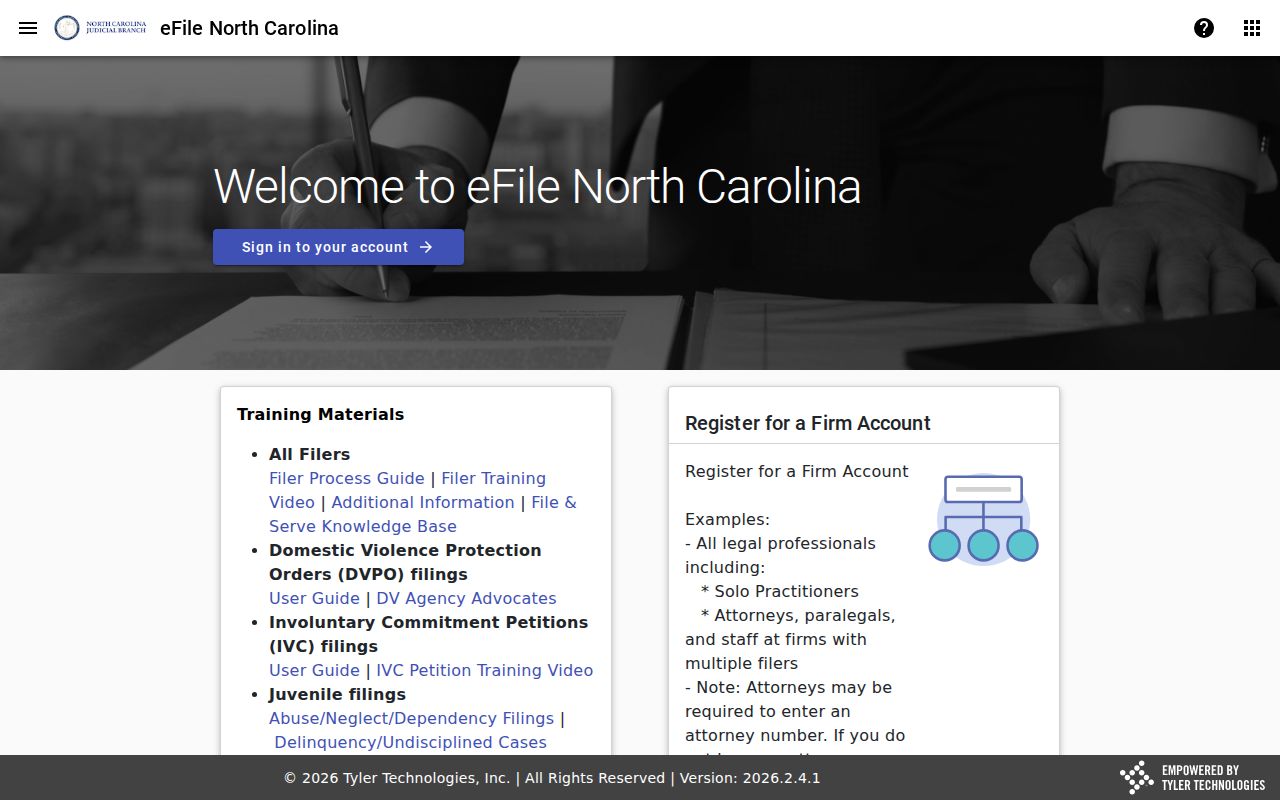
For the filing side of the same statewide technology, see the official eFile North Carolina service. Filing access and public viewing are different functions. Anyone can browse available information anonymously. Elevated access requires legal authority plus a verified connection to the case. That line explains why an Alamance docket sometimes lists an event with no document attached.
The official eFile North Carolina service documents the statewide filing platform used with Alamance eCourts.
Court Dockets: What They Show
An Alamance County Case Summary sorts its details by the question each one answers. The case-information block tells you what the matter is. Assignment information may reveal the court or judge. Party information names the players where access rules allow. Case Events form the dated activity trail, Hearings list settings, and Dispositions carry recorded results. Financial Information, when present, sits in its own panel. Read it as account activity, not as a final outcome or a hearing notice.
What a docket entry proves is narrower than people assume. It shows that a motion, order, notice, continuance, plea, judgment, or similar event was recorded. It does not reveal the contents or legal effect of every paper underneath. For civil, family, probate, or mental-health files, Portal may add a Causes of Action section. Treat an Alamance County court docket as a map. It is not the file itself.
| Case Information | The system case number, case type, category, court location, and status visible to the user. |
|---|---|
| Party Information | Publicly available party roles and names, subject to access restrictions. |
| Case Events | The dated activity timeline, including filings, notices, orders, and hearing-related events. |
| Hearings | Scheduled court events; Search Hearings is the better route for a current Alamance setting. |
| Dispositions | Recorded intermediate or final outcomes when entered by the court. |
| Financial Information | Applicable court-side balances or financial data, not a universal case field. |
Alamance Court Docket Number Parts
Enterprise Justice case numbers have four parts. You get a two-digit year, case-type letters, a six-digit sequence, and a three-digit county identifier. The statewide training example 21CR000003-910 shows the structure only. It is not an Alamance County case. Never guess the last three digits. The citation, court notice, Portal result, or Clerk supplies the true number for an Alamance court record.
- Case Summary
- The Portal timeline also called the Register of Actions, containing public case activity and related panels.
- Setting
- A scheduled court event. A past setting does not establish the next date.
- Continuance
- A postponement of a setting, not a case disposition.
- Certified copy
- A Clerk-issued official copy, distinct from a Portal screen view or ordinary photocopy.
Partial searching is allowed under official Portal guidance, but only with a wildcard. Type the required characters first. For a case number, that means at least four characters before an asterisk. For a party name, enter at least three letters of the last name plus an asterisk, and at least one letter of the first name plus an asterisk. Careful input beats inventing a county suffix.
Alamance County Courts and Their Dockets
Alamance County belongs to North Carolina's unified General Court of Justice. One office, the Alamance County Clerk of Superior Court, keeps records for both trial levels. Superior Court District 17 tries felonies. It hears civil actions over $25,000 and takes de novo appeals of misdemeanors or infractions. District Court District 17 handles misdemeanors, traffic and other infractions, and family and juvenile matters. Its civil actions generally sit at or below $25,000. Magistrates sit within the District Court structure. They take small claims up to $10,000.
Which court holds a case can shift as it moves. A misdemeanor or infraction appeal from District Court adds a Superior Court layer for a brand-new trial. A felony may run through preliminary District Court activity before landing in Superior Court. Follow the case category and the current court in any Alamance docket search. Cities here do not keep separate court databases of their own.
| Court | Docket Covers | Where to Search |
|---|---|---|
| Superior Court District 17 | Felony trials, civil actions over $25,000, and trial-level appeals. | Portal Smart Search, Clerk, and Superior Court scheduling contacts. |
| District Court District 17 | Misdemeanors, traffic, infractions, family, juvenile, and lower-value civil matters. | Portal Smart Search and Search Hearings, then the appropriate Clerk division. |
| Magistrate and Small Claims | Small claims to $10,000 and preliminary criminal functions. | Portal or Clerk; magistrate contact for appropriate preliminary questions. |
| North Carolina Court of Appeals | Appellate proceedings after a trial-court appeal. | Its own appellate services, not the Alamance trial-court Portal record alone. |
Alamance Courthouse Docket Counters
Alamance County runs its court business out of two Graham buildings. Civil work, except marriages, happens at the Alamance County Historical Courthouse, 1 Court Square. Criminal matters sit at the Judge J.B. Allen, Jr. Criminal Courthouse, 212 W. Elm Street. One office keeps the legal record for both: the Alamance Clerk of Superior Court. So a records question can start at either counter.
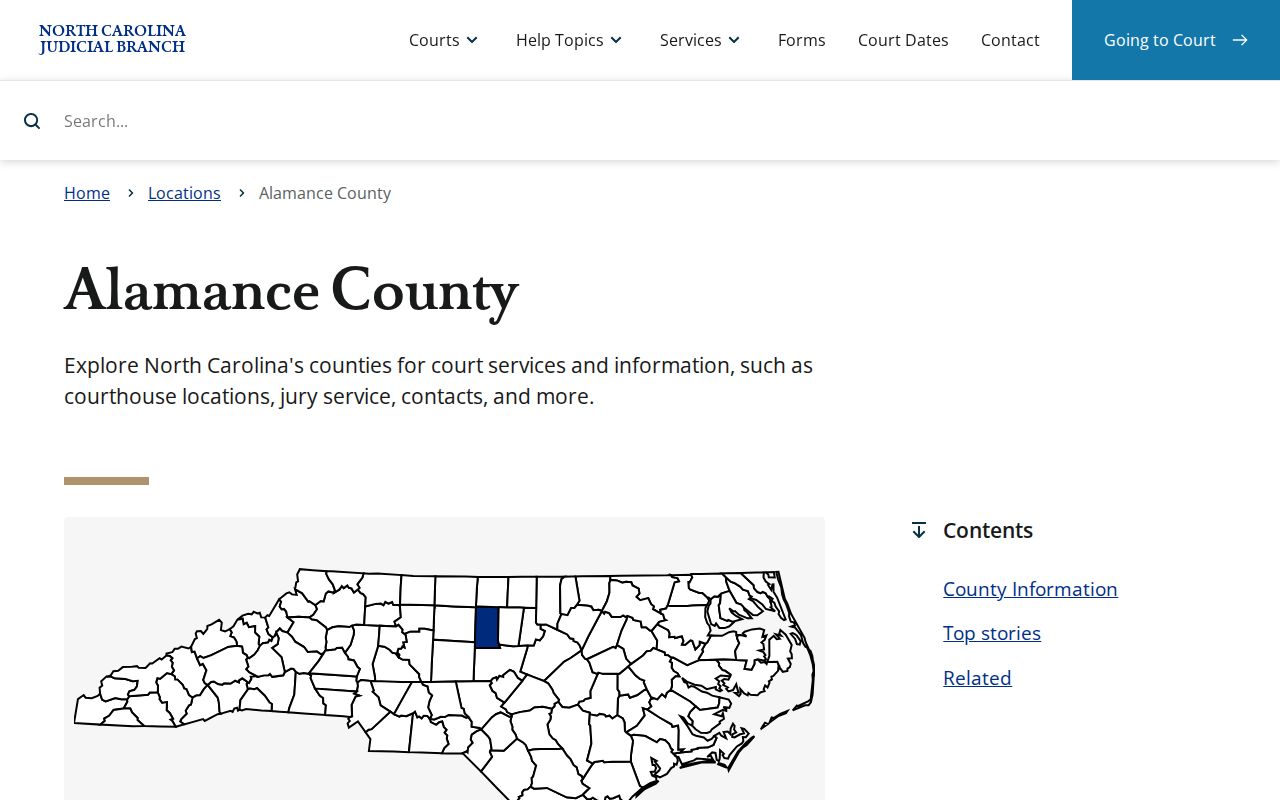
Before you travel, check the official Alamance County court hub for current services and location details. At the Historical Courthouse, use the north entrance. It is the public door, screened for security and fully accessible. The building still holds working courtrooms and Clerk offices. Ask which channel holds your file: civil, criminal, estates, special proceedings, or small claims.
The Alamance County court hub identifies the county court locations and services.
Court Dates and Settings in Alamance County
An Alamance County court date lookup starts in Portal Search Hearings. Pick Alamance if the event happened in the county. Choose the hearing type, pick the most precise search type, and set a date range. You can search by case number, party, business, attorney, judicial officer, or courtroom. Then open the matching case in Smart Search. The calendar shows what is currently set. The Case Summary adds the event sequence and any recorded disposition.
Nothing is fixed, though. A continuance, a case order, a weather closure, or other court action can move a setting. District 17 ratified remote-hearing rules in August 2024. Do not assume any generic appearance method from that alone. For a date coming up fast, call the Clerk. The Superior Trial Court Coordinator is at 336-570-5216, and the District Court Judges office is at 336-570-5212. The Alamance County Court Schedule lays out the full county date route.
Alamance District 17 Docket Settings
Alamance civil scheduling follows a documented local pattern. When a case reaches readiness, the calendar clerk puts it on a ready calendar. A written trial-setting request is due no later than six weeks before the session. After the trial calendar is published, a continuance generally needs a written motion. That motion must show compelling necessity. So an Alamance docket can show a request, then a ready-calendar stage, then a published calendar. It can still change later.
The local Superior Court Calendar Request form asks for a file number or CVS number. It also wants the parties, the requested date and time, estimated length, the subject matter for hearing, and whether other parties were consulted. Motion, Pretrial Hearing, Default, and Other are its named hearing choices. A checked default box requests relief; it does not prove a default judgment was entered. The current Court Hearing result and the case events remain the key record sources.
Note: A published date can change. So a fresh Search Hearings result and the relevant court office are the safest confirmation for an Alamance setting.
Docket Access Under North Carolina Law
Alamance County Clerk records rest on a public-inspection baseline, not unlimited visibility. North Carolina law directs each clerk to keep prescribed records, files, dockets, and indexes. Those stay open during regular office hours unless another law blocks access. The state Public Records Act supplies the broader policy. Court-specific confidentiality statutes and rules still apply too. They govern a juvenile file, sealed material, protected personal information, and other restricted records.
Key Rules:
G.S. 7A-109 requires Clerk dockets, indexes, and records to be maintained and generally open to inspection unless access is prohibited.
G.S. 132-1 states North Carolina’s public-record policy, subject to rules that limit a particular court file.
G.S. 7B-3001 limits public inspection of juvenile records absent authorized access or a court order.
G.S. 132-1.10 addresses redaction of certain personal identifiers in court filings and the Clerk request route for qualifying images.
For an Alamance court record, start with the public Case Summary. Move to the Clerk terminal or paper file when lawful access calls for it. A Portal registration does not override confidentiality rules, and a public record view is not a certified court document.
Alamance Public-but-Not-Portal Records
An Alamance docket can list an event yet offer no online image. Public not Portal describes that gap. It covers material that stays public but never appears in the online public view. It is not the same as confidential or sealed material. A search may return a Case Summary with no document link. That may simply mean the Clerk file or public access device is the next lawful channel. It does not mean the filing was never made.
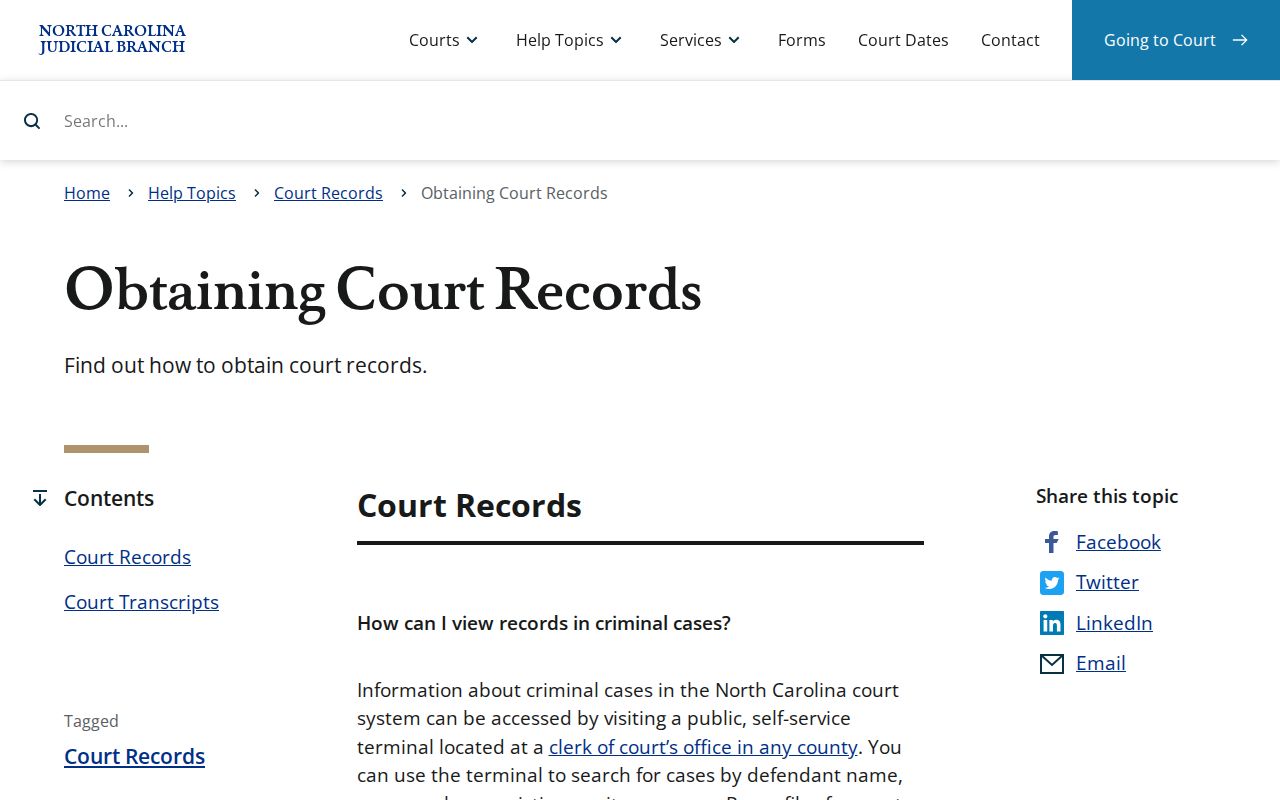
The official court-records guidance covers public terminals at Clerk offices. It also covers paper-file inspection in the county where the case sits, and staff-prepared copies for a fee. It draws the line between online case information and a Clerk-issued copy. That distinction helps most with older Alamance records and anything Portal does not carry.
North Carolina’s court-records guidance describes the official terminal, paper-file, and copy channels.
How the Clerk Keeps Docket Records
The Alamance County Clerk of Superior Court handles clerical and record-keeping work for both Superior Court and District Court. One office, one system. Criminal, civil, family, small-claims, estates, special-proceedings, and judgment records all pass through it. Access rules still apply. The civil counter association is 1 Court Square; the criminal counter association is 212 W. Elm Street. Those locations route a question. They do not create separate county clerks or competing docket systems.
For a plain or certified copy, bring the case number. Name the document or event, and state the copy type. The published statewide schedule lists $2.00 for the first prepared copy page, and $0.25 for each additional page. A certificate under seal is $3.00, and an exemplification is $10.00. Alamance posts no generic online certified-copy form. It states no universal turnaround time. Ask the Clerk to quote the current amount and method before you pay.
Alamance County Clerk of Superior Court
Alamance County Historical Courthouse
1 Court Square, Graham, NC 27253
336-570-5200
Unified Clerk record route for civil and county record questions; criminal courthouse contact is 336-570-5202.
Alamance eCourts Record Access Kiosk
Alamance joined the eCourts kiosk rollout in June 2025. The terminals sit inside the courthouse and offer several services: Portal search, court-date and case-event search, e-filing, payment, scanning, and printing. When a record stays out of reach in a normal Portal session, the kiosk is the practical fallback for Alamance County visitors. The court does not publish a terminal count, and staff-assisted searching is not guaranteed. Ask the Clerk which device and filing channel applies before you count on it.
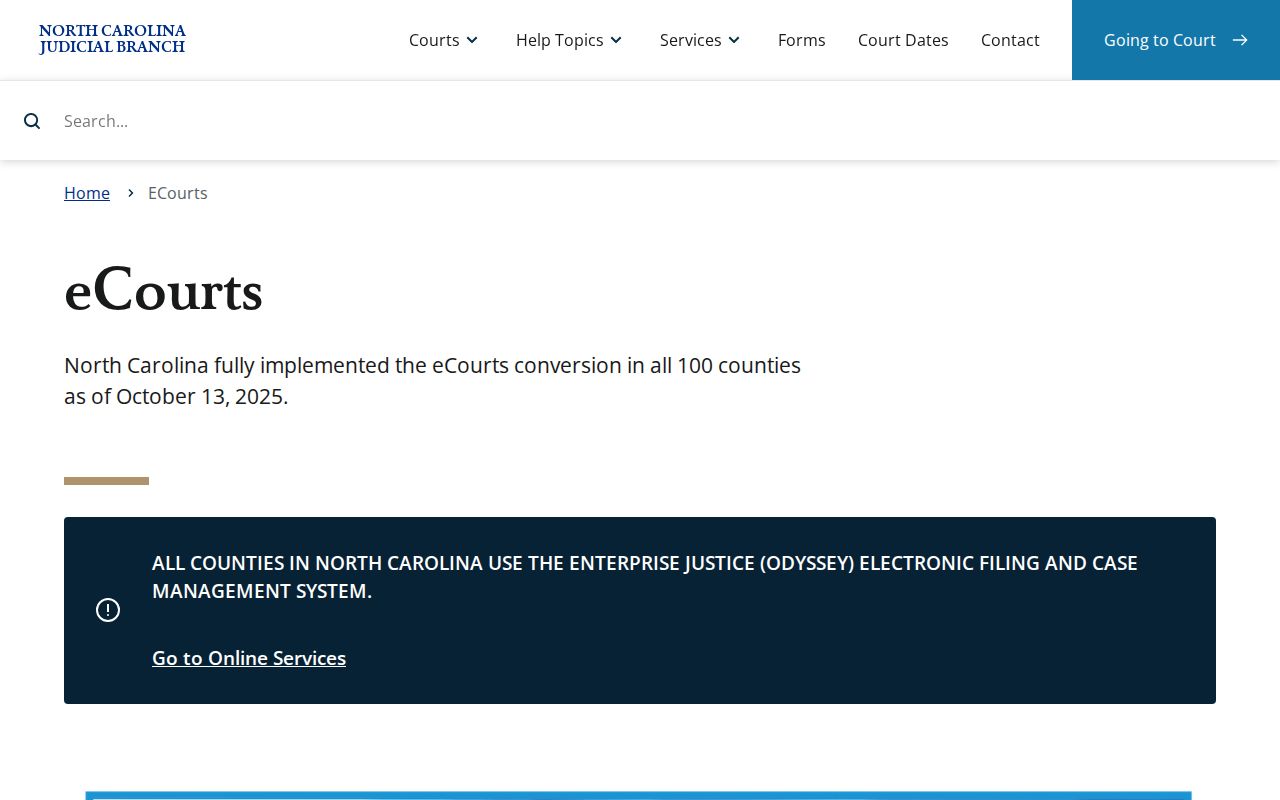
The North Carolina eCourts overview explains the statewide picture. Since October 2025, every county runs on Enterprise Justice and Odyssey, so one Portal system serves as the common search layer statewide. That convenience still requires picking the right county. A case that began in a multi-county city will not surface unless you select correctly, so the county choice matters as much as the search itself.
The North Carolina eCourts overview describes the statewide Odyssey implementation used in Alamance.
City-by-City Court Dockets in Alamance County
None of Alamance County's five largest cities runs its own municipal court for state traffic and criminal dockets. A city police citation or a city-ordinance charge lands in District Court in the county where the incident happened. Location drives everything here. Burlington, Mebane, and Gibsonville all straddle county lines, so a search fact has to include where the event actually occurred. City parking fines are different. A city may collect those through its own administrative channel, but that record is not a North Carolina court Case Summary and will not appear on a court docket.
Burlington Court Records
Population 61,722. Burlington spans Alamance and Guilford, so the event county controls the court-record route.
Graham Court Records
Population 20,933. Graham is wholly in Alamance and is home to the county court locations.
Mebane Court Records
Population 20,426. Mebane cases route to Alamance or Orange based on the event location.
Elon Court Records
Population 11,533. Elon state-court matters use the Alamance District Court and Clerk route.
Gibsonville Court Records
Population 9,688. Gibsonville events can belong in Alamance or Guilford court records.
Alamance City Court Record Routes
For anything that happened in Alamance, select Alamance in Portal. Then use the Alamance Clerk channel for a certified copy or a date confirmation. A Burlington, Mebane, or Gibsonville address settles nothing on its own. The citation location controls. A Burlington or Gibsonville matter that arose on the Guilford side belongs with Guilford court records. An Orange-side Mebane matter belongs with Orange court records. The statewide Portal will search those counties. Each county Clerk still owns the local court file.
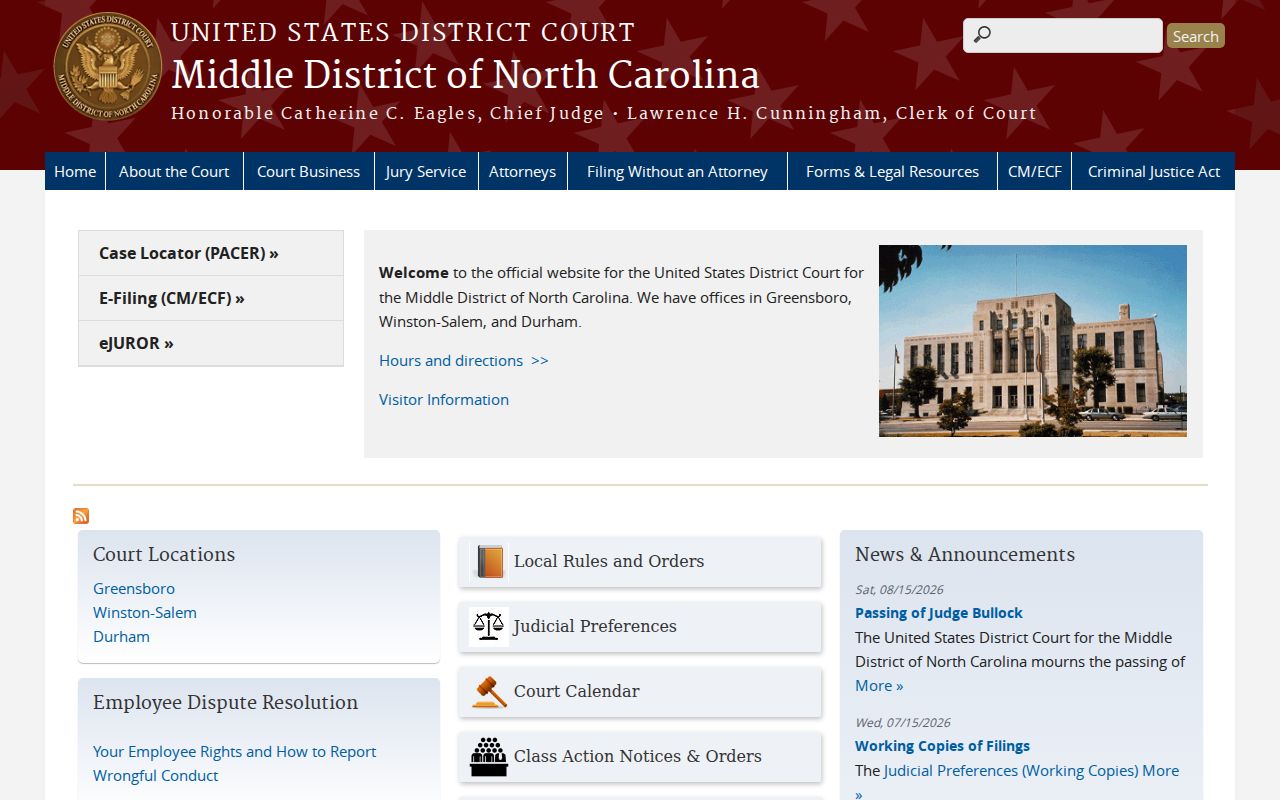
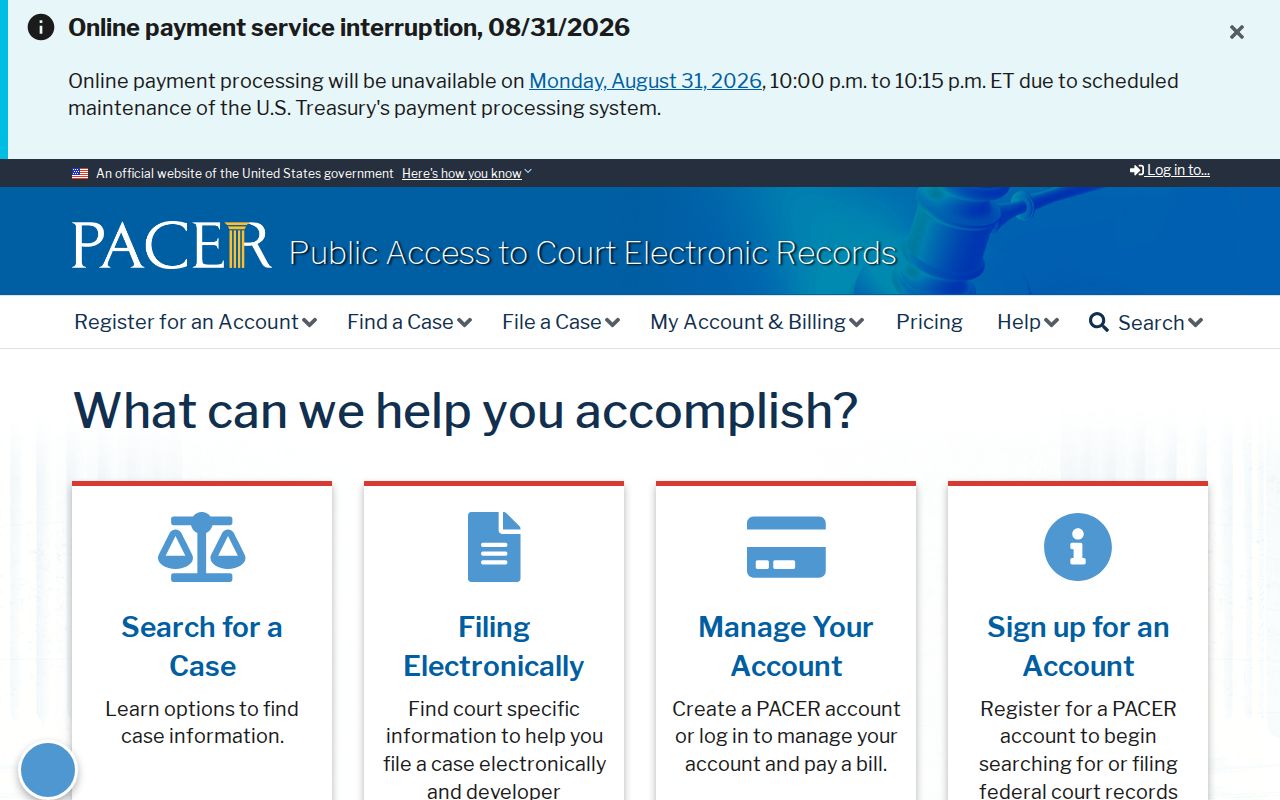
State and federal court dockets are separate worlds. Alamance sits in the Middle District of North Carolina. Federal cases there run through PACER and CM/ECF instead of the state Portal. The Middle District court and PACER are the official channels for any federal case. An Alamance state Case Summary will never stand in for a federal docket.
The U.S. District Court for the Middle District of North Carolina is the official federal court source for the region.
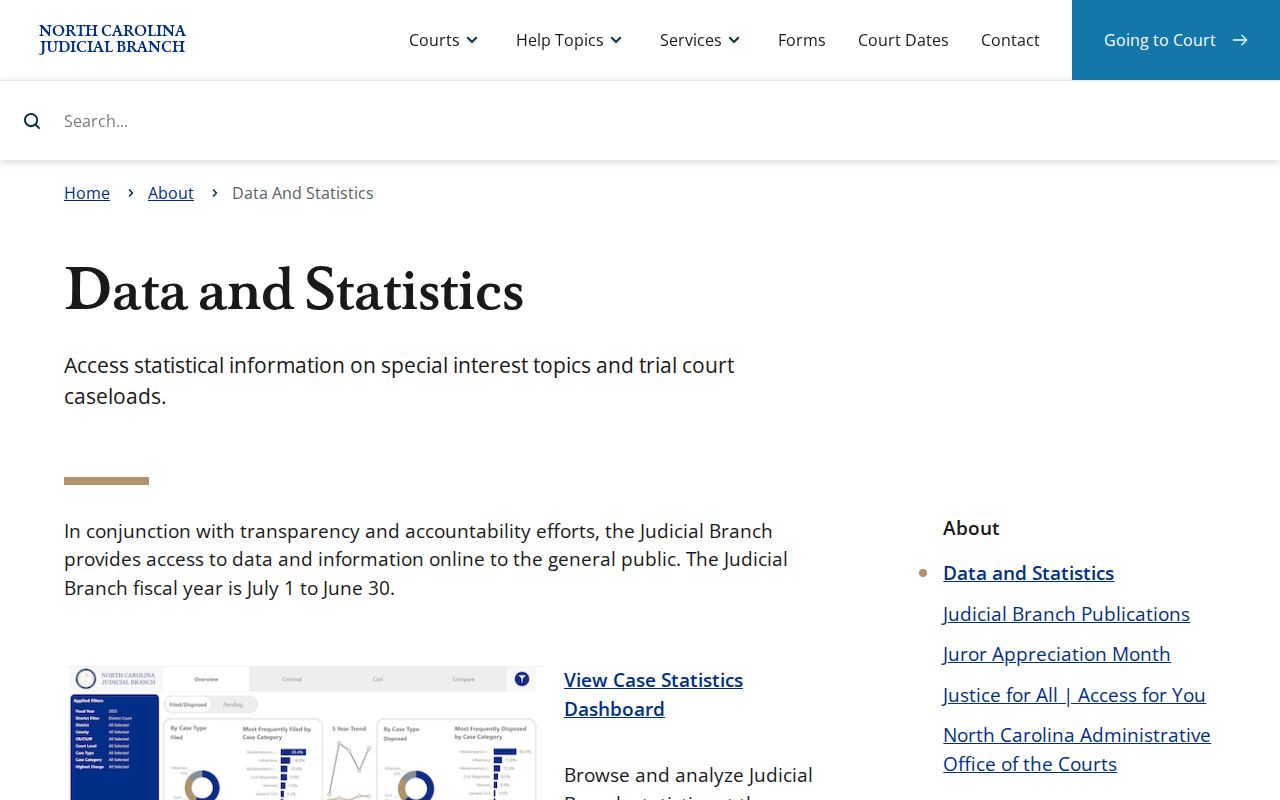
The Judicial Branch separates live court data from case lookup. Its data and statistics collection gives you court-system context. It is not a way to find one case. The FY 2023-24 reports list $1,200,876.21 in combined Alamance fines and forfeitures. That figure tracks money disbursed, not a case count, conviction total, or fine schedule.
North Carolina court data and statistics provides public system reports and dashboards.
PACER is the official public access service for federal court docket reports and documents.
Map and Directions to the Alamance County Historical Courthouse
Superior Court civil matters, other than marriages, and the Clerk of Superior Court's civil counter sit at the Alamance County Historical Courthouse, 1 Court Square, in downtown Graham. The building also holds a Superior Court courtroom and a small-claims/special-proceedings courtroom. Superior Court criminal matters, including felony trials, are held instead at the Judge J.B. Allen, Jr. Criminal Courthouse a few blocks away at 212 W. Elm Street.
Alamance County Historical Courthouse
1 Court Square
Graham, NC 27253
336-570-5200
Monday through Friday, 8:00 a.m. to 5:00 p.m.
Judge J.B. Allen, Jr. Criminal Courthouse
212 W. Elm Street
Graham, NC 27253
336-570-5202
Enter the Historical Courthouse through the north door, the building's only handicap-accessible entrance and its security-screening point; the east, west, and south doors are exit-only. Public parking around Court Square carries a two-hour limit, with free walkable lots nearby, while wheelchair access runs from street parking to the sidewalk and into the building. At the Criminal Courthouse, park in the adjacent lots near Graham Presbyterian Church or the 100 block of West Elm Street, also limited to two hours on the street, with wheelchair access from the lot to the lobby.